HomeAnti-aging, diet, Genetics, health and wellness, Medical News, mental health, Nutrition
The Gene That Wouldn’t Let Us Sleep (and a flower power antidote)
 Dr Sharad
August 28, 2026
Dr Sharad
August 28, 2026
Imagine one of your ancestors walking across the African savannah. The grass moves. There are two possibilities. It is the wind. Or maybe it is a lion. The relaxed hominin thinks: Probably the wind. The anxious hominid stops. The heart rate rises. Pupils dilate. Blood is redirected towards muscles. The brain begins calculating escape routes. Most of the time, it was probably the wind. But evolution does not reward philosophical calm. It rewards survival. And so, thousands of generations later, here we are, descendants of the worriers or warriors (more of the former survived simply by avoiding battles).
We tend to think of anxiety as something that has gone wrong. Evolution suggests the opposite. Anxiety worked for us. That is why we still have it. The problem is that the lion has changed. Today the rustling grass is an email arriving at 11 p.m. It is a mortgage payment, an examination, an abnormal scan, a relationship in trouble, a social-media notification or the small grey bubble telling us that someone is typing a reply. Our nervous system is ancient. Our anxieties are modern. Most of our problems are “first world” and third-rate ones. Evolution has never been particularly good at software updates.
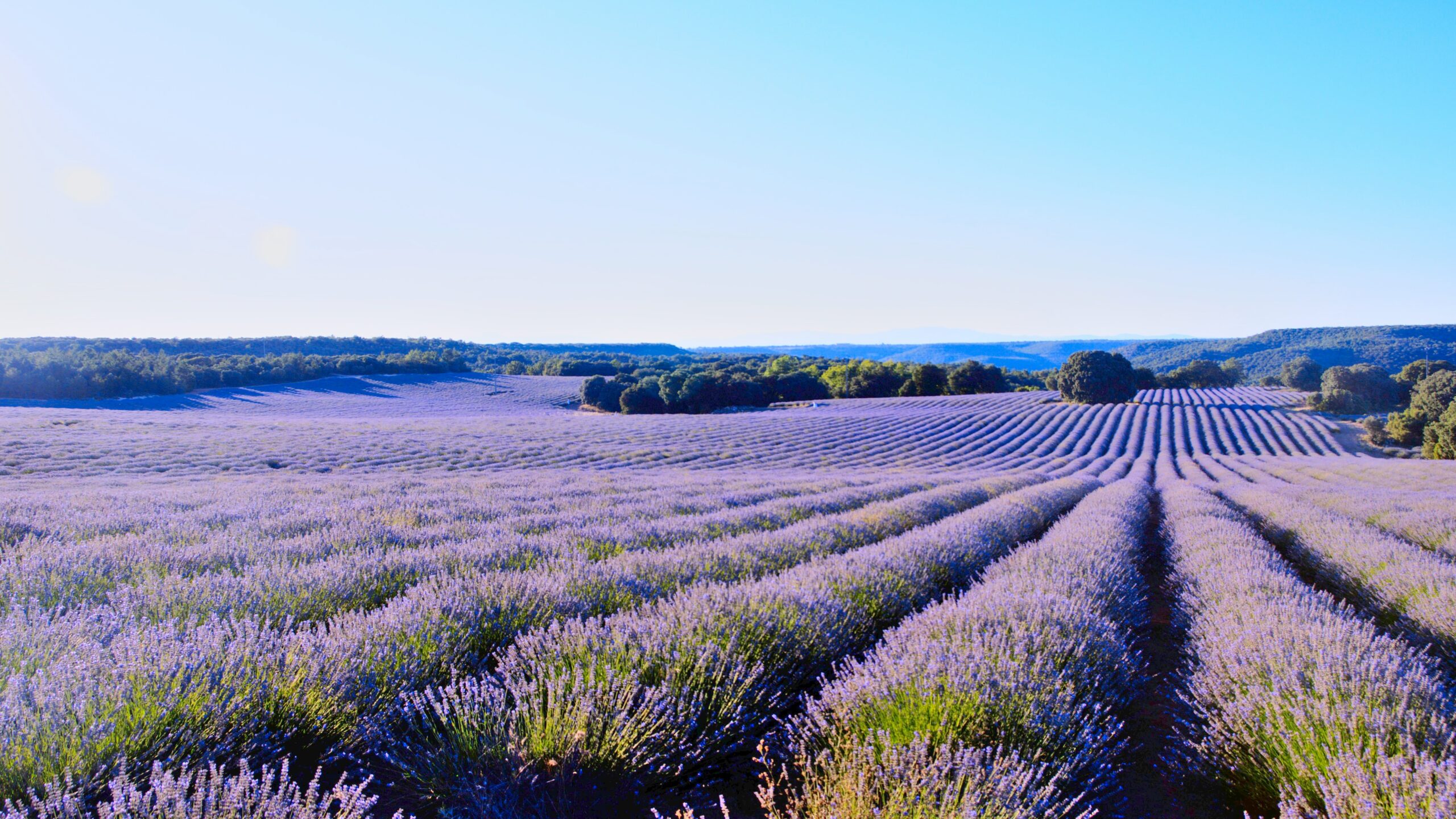
This brings me to lavender. Lavender has featured in literature and history. It is said that Cleopatra, not wanting to rely on her beauty alone, anointed her body with lavender oil to seduce the restless minds of Julius Caesar and Mark Anthony. Lavender oil has been known to contain many compounds that cause mental relaxation. If I told you that scientists had developed a compound that influenced neuronal calcium signalling, altered neurotransmitter release and affected serotonin pathways, the medical system would automatically think I was describing a pharmaceutical drug. If I then told you that the compound came from lavender, you might imagine a candle. Scented with woo-woo.
That difference in thinking fascinates me. Silexan is a standardized pharmaceutical medication derived from Lavandula angustifolia. It is not simply lavender fragrance or aromatherapy. It has been investigated in randomized clinical trials involving more than a thousand patients with anxiety disorders and subthreshold anxiety. A meta-analysis of five placebo-controlled trials found that Silexan produced significantly greater reductions in anxiety than placebo, while adverse-event rates were broadly comparable to taking dummy pills. It has also been compared favourably with conventional anxiety drugs in studies. A study in Scientific Reports, a journal within the prestigious Nature stable, concluded that “The effect of Silexan 80 mg was observed to be same as that of paroxetine.” Paroxetine belongs to the same group (SSRI i.e., selective serotonin reuptake inhibitors) as the ubiquitous fluoxetine (Prozac). Silexan appears to inhibit voltage-dependent calcium channels in neurons, a mechanism that may dampen excessive neuronal signalling. Research also suggests effects on serotonin-1A receptors and extracellular serotonin. Another paper spoke of the effect size of Silexan i.e., the magnitude of the difference between a psychiatric treatment and a control group, being greater than that of standard prescription antidepressants!
Our brain does not appear to distinguish between a molecule increasing brain levels of serotonin according to whether it originated in a laboratory or a flower. We do. Modern conditioning to think of nature as a commodity. However, nature has always been a pharmacologist, has it not? After all, the willow willed us the path towards aspirin; the foxglove delivered digitalis; opium poppies presented humanity with the highs (and lows) of morphine. The Pacific yew provided us paclitaxel; metformin was made from compounds discovered in the French lilac.
All this should not surprise us because nature has been conducting chemical experiments for four billion years. Plants cannot run away from predators. They cannot bite or bark. They cannot visit a doctor. Therefore, they evolved survival chemistry. Plants manufacture molecules to deter predators, attract pollinators, fight microbes, repair damage and communicate with other organisms. We humans actually arrived extraordinarily late to this environment.
It is also a mistake is to romanticize nature. Natural does not automatically mean safe. Hemlock is natural. Arsenic is native. Amanita mushrooms are organic. Evolution did not manufacture the world for our human benefit. But the opposite view is equally foolish: thinking a molecule becomes effective or acceptable only after big pharma manufactures it. Ultimately, a molecule has no ideology or bias. Unlike humans. It either interacts with our biology, or it doesn’t.
The writer in me thinks there is something beautiful about a plant synthesizing something to quiet an animal’s evolutionary anxiety. Two ancient survival strategies meeting inside the modern human brain. The larger lesson goes beyond lavender. Much of modern illness can be understood as evolutionary mismatch. Our appetite evolved when calories were scarce. Now calories are everywhere. There are more deaths globally from diseases caused by over-nutrition than starvation these days.
Our stress response evolved for brief physical threats. Now psychological threats can follow us continuously through a smartphone. Our immune system evolved in environments rich in microbes. Our circadian system evolved under sunlight and darkness rather than LEDs and midnight emails. Our anxious brain evolved to keep asking: Is that a lion? The trouble is that today there is always another patch of grass moving. And patch protection by industry. Maybe this is why most doctors in America or in New Zealand have not heard of this product. But biology recognizes no such geographical borders. There is only chemistry. Molecules. Receptors. And there is evidence.
Perhaps health is not about eliminating these ancient systems. It is about understanding why evolution gave them to us and learning when to turn them down. Sometimes the molecules we need have been there all along. We doctors’ must stop judging them by their names. Asking these questions of human conditions with no expectation of the answer we need to hear is the kind of science I like to spend my time on. That is what my books on health, evolutionary biology and genomics like Skin, a Biography (4th Estate) and Biohacking Your Genes (Beyond Words) have been about. There is a chapter titled “Sabre-toothed Tigers and Scaredy Cats” in another of my books The Genetics of Health (Simon and Schuster) that has been translated into a few languages, including German. Speaking of German, in 1951, upon the death of his beloved sister Maja, Albert Einstein wrote in a private correspondence: “Schau tief in die Natur, und dann wirst du alles besser verstehen” (Look deep into nature, and then you will understand everything better).
Nature is neither our physician nor our enemy. It is simply the laboratory in which we evolved.
THE END
References:
Markus Dold and others. Efficacy of Silexan in patients with anxiety disorders: a meta-analysis of randomized, placebo-controlled trials. European Archives of Psychiatry and Clinical Neuroscience. Oct 2023
Siegfried Kasper and others. Silexan in anxiety, depression, and related disorders: pharmacological background and clinical data. European Archives of Psychiatry and Clinical Neuroscience. Oct 2024
Siegfried Kasper and others. Lavender oil preparation Silexan is effective in generalized anxiety disorder – a randomized, double-blind comparison to placebo and paroxetine. International Journal of Neuropsychopharmacology. June 2014
Footnote: This a personal blog and should NOT be considered individual medical advice.

Written By
Dr Sharad Paul


Dr Sharad Paul is an award winning, world renowned recognised skin-cancer expert and thought-leader.