 Dr Sharad
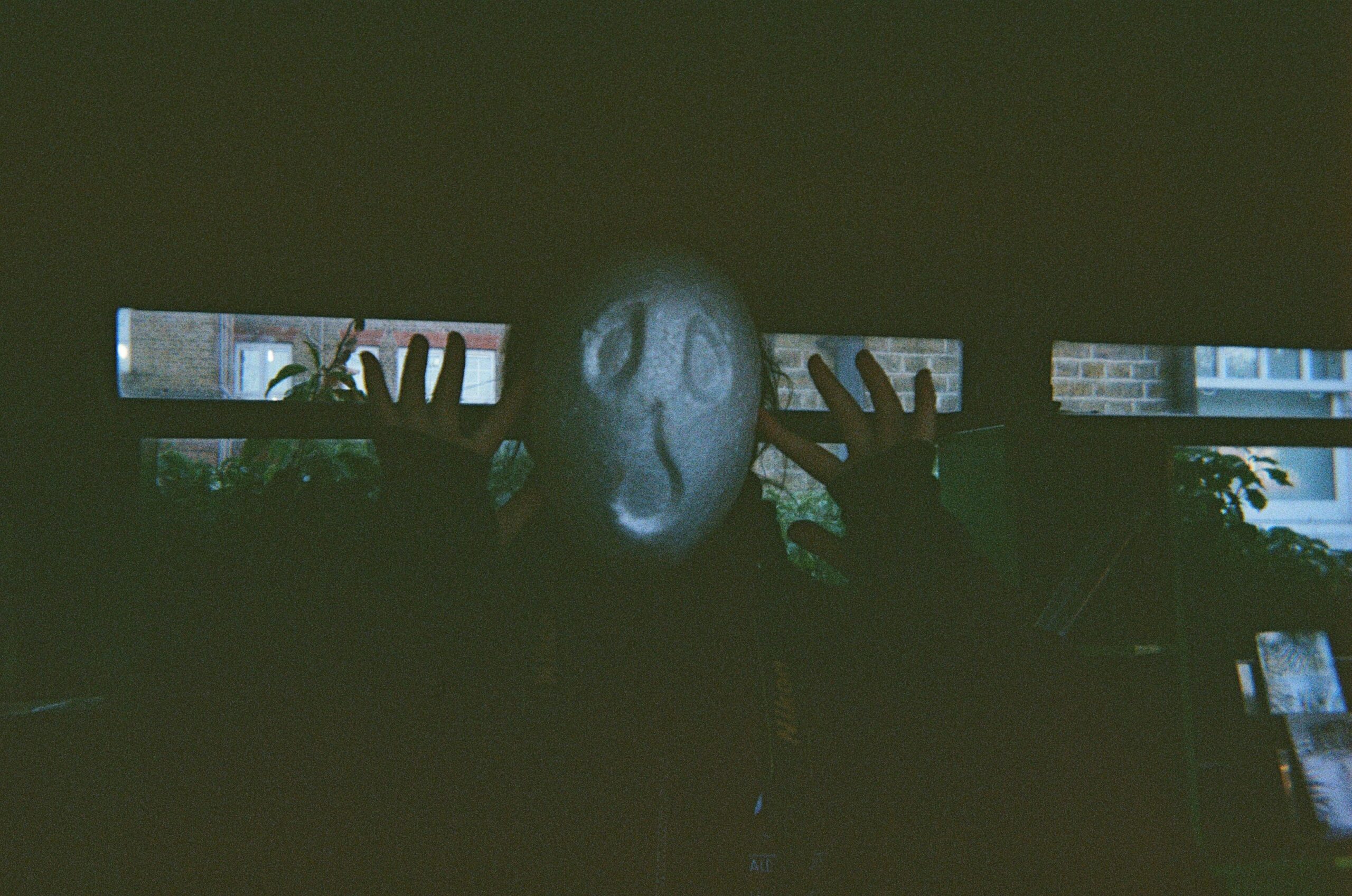
Whenever I drink Bailey’s Irish cream, irrespective if it is the original version or one of the new-fangled flavoured versions, I have nightmares. Therefore at home I call it “nightmare Baileys” and avoid the damn drink! What I also know is that it was the creation of a guy called David Gluckman, a South African from Cape Town who had moved to London in 1961 to take up a job at an advertising agency. Their brief was to create a new drink that reflected Ireland. The team decided to combine cream (after all Ireland is full of green pastures) and whiskey (what would Ireland be without alcohol?). They first combined Jamesons Irish Whiskey and a tub of single cream and added sugar to make it taste sweeter. It tasted awful. They then added Cadbury’s Powdered Drinking Chocolate and as Gluckman recalls, “Hugh and I were taken by surprise. It tasted really good. Not only this, but the cream seemed to have the effect of making the drink taste stronger, like full-strength spirit. It was extraordinary.” A new legend was born. There was no person called Bailey involved in the production, so the signature you see on the bottles is simply made up artwork. The team was paid 3000 pounds, which seemed a lot of money for a concoction that didn’t take involve technological advances. However, it must be noted that on December 3rd, 2007, Diageo, the new owners announced that they had sold the billionth bottle of Baileys since it was first introduced in 1973! I thought my bad dreams on consuming Gluckman’s mixture may be a coincidence but and few personal randomized trials later, I know it does not agree with my body. Maybe it is because of the cream content and my lactose intolerance genes. What I know is, it is no good for me!
Speaking of dreams and nightmares, Sigmund Freud was 44 when he published Die Traumdeutung, better known to readers in English as The Interpretation of Dreams. 600 copies were published in the year 1900, which took 8 years to sell! It was not even reviewed by the scientific community and largely ignored. As Freud’s other work became known, the book became more widely available, translated into English, and now considered one of the classics of psychoanalysis.
“Dreams are the royal road to the unconscious,” Freud wrote, suggesting that our dreams were paths into our psyche—deepest desires, distressing fears and inner conflicts. In other words, Freud’s assertions were that dreams were a window into our unconscious minds. This was magical thinking with a difference. He wasn’t suggesting that wishing something makes it so. Instead Freud was asserting that that dreams are almost always expressions of our unfulfilled wishes.
One of my biggest contributions to medicine or the science of skin is in the field of skin tension. My book, Biodynamic Excisional Skin Tension (BEST) Lines for Cutaneous surgery, published in 2018 was considered “the first major concept in skin tension lines since Langer’s cleavage lines in 1861” by the publisher, Springer Nature. One of the chapters in the book is titled “Patterns, Biomechanics and Behaviour” where I discuss how our anatomy of our physical and the physiology of our mental worlds collide. I became interested in this when I was asked to operate on animals, primarily apes, that had skin tumours, and noticed that these creatures did not have scalp whorl patterns. The hair whorl becomes visible on the “crown” of the human head between the 10th and the 18th week of gestation in the womb. In other experiments, I had established that the golden spiral pattern—that abounds in galaxies, flowers, pinecones, and on human scalp whorls—is nature’s pattern for rapid expansion. Why are humans the only primates to have whorls on the scalp? People suffering from schizophrenia have been noted to have abnormal scalp whorl patterns. Does this indicate maternal factors, possibly dietary or deficiency related, during weeks 10–17 of pregnancy? These physical manifestations on our bodies suggested an underlying altered thinking. All these areas are avenues for further research as I mentioned in my lecture at the Grand Rounds at the Mayo Auditorium in America in 2017.
Maybe many doctors grapple with their professional preoccupations over years of practice until the mystique ceases to be interesting. The problem with me is I am an eternal student, which means the energy of curiosity doesn’t get exhausted. There are still plenty of things I am figuring out. I had decided to undertake a second research degree—all while running a busy medical practice—and part of that research led to this book on skin tension. But in addition to studying skin tension using external devices, there was an internal tension created by my observations: the spectre of evolved interconnectedness of our physical and mental being that was causing diseases significantly more than I had envisaged. In medicine, as specialties have become increasingly divided into silos there is a tendency to separate the biomechanics (physical) from behaviour (mental). All this may sound abstract, and some random riff, but this has some relevance to our inner thoughts and dreams. We ignore the mind-body connection at our peril. Mind and body: unknown to each other, these anthropological autodidacts share molecular and genetic pathways. And when considered together they do affect our thinking in ways that are only now becoming apparent. A recent study conducted by Cambridge University along with King’s College, London, published in The Lancet, analysed dreams and nightmares of participants. Over 600 people with lupus or other autoimmune diseases such as rheumatoid arthritis were studied. About 60 percent had graphic nightmares of being attacked, trapped, or falling that had begun occurring over a year prior to the actual diagnosis of autoimmune disease. Some of these patients had daymares i.e., waking hallucinations. The authors concluded that if you are suddenly having intense nightmares or hallucinations on a regular basis—unexplained by any substance abuse (or Baileys: No, they didn’t say this bit!)—they may be a prodrome i.e., an indicator of impending autoimmune disease, especially if you have other symptoms or there is a family history of autoimmune disorders.
So if you are troubled by disturbing visions at night, it might be your immune system creating some mind-bending mischief that may need investigating.
THE END
IMPORTANT: This blog is about science-communication, education, interesting newscience, and medical research to do with (mostly) health and skin. It is not individual one-on-one medical advice. Please do not stop any medications without consulting your own doctor.

Written By
Dr Sharad Paul


Dr Sharad Paul is an award winning, world renowned recognised skin-cancer expert and thought-leader.