Homehealth and wellness, Medical News
A Christmas Message from the 100-Acre-Wood
 Dr Sharad
December 21, 2025
Dr Sharad
December 21, 2025
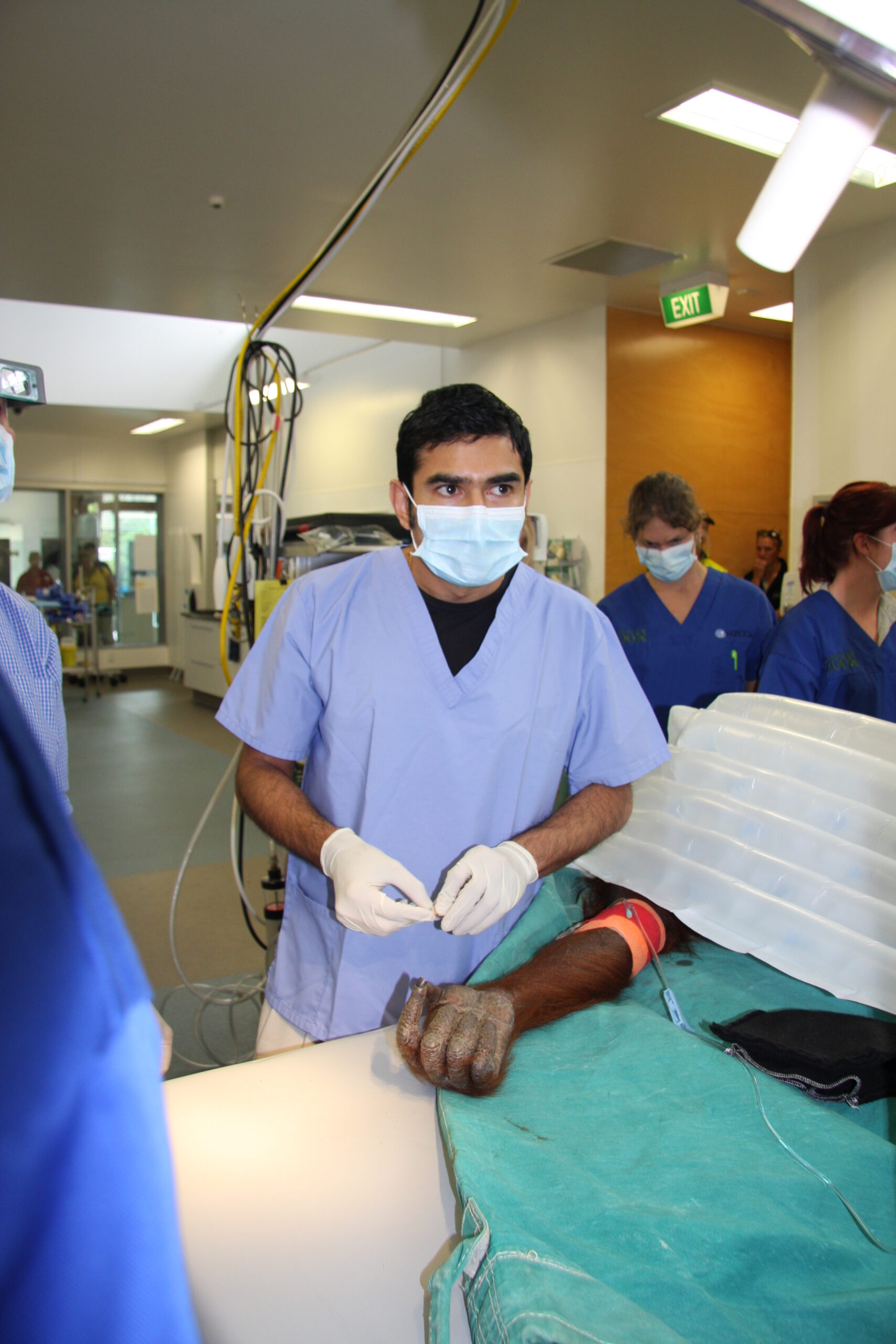
A few years ago, I was walking through Regent’s Park in London, heading towards Primrose Hill where I had a book signing at the lovely bookstore there. On another occasion, I was invited to visit the zoo to examine the skin lesions of some animals! This is because over the years I have built up an expertise in diagnosing and treating skin lesions—and sometimes I am called upon to operate on animals internationally.
The London Zoo, originally limited to members of the Zoological Society of London—originally designed to have a collection of animals for scientific study—is the world’s oldest, having been established in 1828. This was where the story of Winnie-the-Pooh began. During World War I, a Canadian army veterinarian named Harry Colebourn had bought an orphaned bear outside the Winnipeg train station for $20. He named the bear Winnie, after his hometown in Canada, Winnipeg. The bear even became the mascot for his army regiment and travelled with the troops to London. When these soldiers were posted in France, the friendly bear was left in the care of the London Zoo and became an instant attraction. According to zookeepers’ anecdotes recorded in newspapers of the day, it was the tamest bear they had seen, and children were allowed to ride on Winnie’s back and hand feed her. This was where young Christopher Robin saw the bear. He loved the bear so much that he visited regularly with his father and named his teddy bear Winnie-the Pooh. This inspired his father, Alan Alexander (A.A.) Milne, to create a story based around an anthropomorphic bear and the rest is literary history.
As a writer of fiction, there is a back story here that interested me. A.A. Milne’s father was John Vine Milne who was the Principal of Henley House School, a private school in Kilburn, London. One of the teachers in this school was H.G. Wells, later famous for his science fiction novels such as The Time Machine and The War of the Worlds. Wells was a science and math teacher for A.A. Milne. When Milne went onto Cambridge University and became the Editor of the literary magazine, Granta—which was originally a student magazine named after the River Granta, an old name for the River Cam that flows through the city. When Milne interviewed Wells—who was by then a famous writer—for Granta magazine, it led to a friendship and mentorship that encouraged Milne to write books (until then he had been writing poetry).
Where did this random topic for this blog come from? During Christmas time, medical journals have a bit of fun in medicalising fictional characters. Around 25 years ago, a Canadian Medical Association Journal article studied “pathology in the Hundred Acre Wood” and concluded that:

“[Pooh bear has] … attention deficit hyperactivity disorder (ADHD), inattentive subtype. As clinicians, we had some debate about whether Pooh might also demonstrate significant impulsivity, as witnessed, for example, by his poorly thought out attempt to get honey by disguising himself as a rain cloud. We concluded, however, that this reflected more on his comorbid cognitive impairment, further aggravated by an obsessive fixation on honey. The latter, of course, has also contributed to his significant obesity. Pooh’s perseveration on food and his repetitive counting behaviours raise the diagnostic possibility of obsessive compulsive disorder (OCD). Given his coexisting ADHD and OCD, we question whether Pooh may over time present with Tourette’s syndrome. Pooh is also clearly described as having Very Little Brain. We could not confidently diagnose microcephaly, however, as we do not know whether standards exist for the head circumference of the brown bear.”
Sadly, if the article was written today, they would be putting poor Pooh bear on the weight-loss medication Ozempic! And he would no longer be able to enjoy the taste of honey.
Anyway, in the spirit of Christmas, I thought I would look at lessons on love, humanity and positivity we could all learn from the Gospel according to Saint Pooh:
“Love is taking a few steps backward maybe even more to give way to the happiness of the person you love.” ∼ Winnie-the-Pooh
Here is a passage from my second novel, To Kill a Snow Dragonfly (4th Estate) in the same vein:
“.. There are parts within the corridor where the walls are so narrow that there has to be some adjustment of stride, and someone has to give in at times.”
In times where everyone seems to talk past each other about their own agendas, we seem to have lost the ability for respectful debate.
Love needs little explanation but needs reflection in 2025 which has been a terrible time for the world. In a world driven by social media algorithms, big tech has figured out that hate sells. I was at an ideas festival and a marketer for big tech remarked, “Sex used to sell. Now we know rage sells better…”
Christmas ends up conflicted because of the clash between the materialism of gifts to the captivating message of discontinuous and unconditional love. Christmas and summer holidays converge into an absurdity in the southern hemisphere, where family gatherings at the beach yield different emotional landscapes. Maybe at Christmas it is time to meditate on the basic message of Jesus—irrespective of if you consider him man or God: “Love thy neighbour as thyself”. It is natural for one to love family and friends but truly selfless to love a stranger as you would yourself.
“The things that make me different are the things that make me, me.” ∼ Piglet
My widely watched TEDx talk was on the “myth of race”. Evolutionary biology points to our common origins out of Africa. Yet increasingly we are seeing the politics of division and hate, and discrimination of people that look different. For me as a humanist and doctor, those differences amongst us are what makes us human, and indeed keeps medicine and dermatology interesting for my (perhaps too) curious mind.
For those that doubt the out of Africa theory—of course there was some intermingling or homo sapiens and neanderthals etc—our only universal organ, skin, offers a clue. Mites that live on our skin and that cause flare ups of acne and rosacea have the DNA of our origins. A few years ago, researchers found that as modern humans—homo sapiens, our race—migrated out of Africa about 100,000 years ago, these Demodex mites simply came along for the ride. What was interesting is that different human populations in different parts of the world now have different mites, these mites follow families through generations. While they are easily transferred between members of a family, they are not transferred onto other ethnic populations easily. A study by Michelle Trautwein from the California Academy of Sciences found that different parts of the world host different mite lineages … The continent where a person’s ancestry originated tended to predict the types of mites on their faces. They found that mite lineages can persist in hosts for generations, so we all may be carrying some African mites!
“It never hurts to keep looking for sunshine.” ∼ Eeyore
Eeyore, the old grey stuffed donkey and friend of Pooh fulfils all the DSM manual (whatever the version is now) criteria for a diagnosis of Major Depressive Disorder. Yet even he realises the importance of positivity. In my latest book, Biohacking Your Genes, I mention how that even skin biopsy wounds heal faster in those that are positive! But happiness is not a natural survival instinct such as food seeking or our stress response. So sometimes it has to be learned. Here is the section from my book about how we can all do this:
“So, how does one cultivate positive thinking and hopeful optimism for greater success? Following the steps I have outlined next is a good guide. This is something I use when mentoring medical colleagues, students, and even school children. I use VIGOUR as a useful mnemonic to help them remember these steps.
V: Visualize success—Think of your goals and how you are going to achieve them—the plan and your actions.
I: Increase self-awareness—Known techniques for developing self-awareness are meditation and practiced breathing. Even keeping a daily journal can help.
G: Gratitude—Simple practiced gratitude like complimenting yourself and others; being grateful for people in your life and letting them know that. In a business, being grateful to and for your customers.
O: Optimism orbit—Hang out or spend time with positive people and avoid those who drag you down with their negativity.
U: Understanding—Essentially, understanding negativity is reframing your thinking. For example, if you are anxious about an exam, you can change your thinking
to “I am not the only one. It is normal to feel this way. What’s the worst that can happen? Eventually things are going to work out fine.”
R: Reinforcement—This is where using external resources helps. Watching a comedy, buying something for yourself, or receiving gifts, etc.
Such practiced positivity helps not only your health span but also your lifespan.”
Every day I am grateful to and honoured by people who come to see me as a doctor, people who like reading my books or blogs and those interested in my ramblings. This year I had patients that travelled to see me all the way from Bannockburn, Boulder, Bengaluru and Bolivia (you know who you are), and I cannot help being humbled far more than I can express.
I want you to read this Christmas blog as a personal message because you have been part of my life either as a client, friend, family or follower of my work. Thank you for not letting the miles not diminish our friendships, for the travel-worn gifts, emails, cards, grabbing the fleeting times we get to meet and making those moments memorable for me. The events of the year are what Christmas becomes—memories that gather in your head, creating a true summer you cannot forget irrespective of if the weather plays its part or not.
Wishing everyone a fantastic Christmas season, happy holidays, good health and all the very best for 2026!
THE END
Written By
Dr Sharad Paul


Dr Sharad Paul is an award winning, world renowned recognised skin-cancer expert and thought-leader.